
Are AI skin scanners accurate for tracking microdermabrasion progress? The straight answer is this: they can be of some help, but on their own, they just aren’t reliable—and that’s a verdict from someone who uses top-of-the-line AI skin analysis all the time at The Facial Hub.
You know what’s pretty cool? Getting your face mapped out on a screen with all sorts of metrics and colour overlays – it feels like a real science experiment. But these systems still heavily rely on artificial intelligence, machine learning, and computer vision – and that doesn’t even begin to account for the fact that they don’t come close to understanding you as a person.
Down here in Brisbane, where our skin has to deal with humidity, UV and all the rest, it can change pretty quickly. Making real progress with treatments like facial microdermabrasion is more about putting those numbers in context than just relying on them.

Contents
- 1 What Skin Scanning Technology Measures
- 2 How Skin Changes With Treatment
- 3 When Skin Tracking Helps — And Doesn’t
- 4 Real Client Experience From The Facial Hub
- 5 Why Brisbane Skin Behaves Differently On Scans
- 6 The Direction Of Skin Tech In 2026
- 7 The Right Way To Track Your Skin Progress
- 8 Treatment Costs And What You’re Really Paying For
- 9 Should You Rely On AI To Measure Your Results?
- 10 Final Thoughts: Real Skin Progress Isn’t Digital
- 11 FAQ
- 11.1 Will an AI scanner give you a picture of your progress after just one session?
- 11.2 Why do scan results seem to change from one visit to the next?
- 11.3 Can you trust those skin analysis apps that you can use at home?
- 11.4 How often should you check in on your progress?
- 11.5 Can these tools actually detect serious skin issues?
What Skin Scanning Technology Measures
AI scanners might look pretty clinical, but if you know what they are actually measuring, you can stop getting distracted by the hype.
Most modern AI skin analysis systems use some serious imaging tech and deep learning models – often using a convolutional neural network to analyse images based on a huge database of data. They measure:
- How smooth or rough your skin is
- Pore size and clogging
- Dark spots and sun damage
- Fine lines and wrinkles
- How oily or hydrated your skin is
- Any early warning signs of skin problems
These systems depend a lot on the data they have been trained on – and this is especially important when you are talking about skin tone classification and the well-documented issue of skin tone bias in AI dermatology tools.
The Key Limitation
They don’t get that your skin has a story to tell—your personal history, your hormones, how the environment is treating your skin right now, and how it responds to treatments like microdermabrasion or chemical peels.
And that’s where it all gets pretty interesting.

How Skin Changes With Treatment
Microdermabrasion is a treatment I’m really fond of when done right – and often misjudged by people who don’t know its full potential. For therapists who want to build a stronger understanding of controlled exfoliation, dermaplaning certification classes can also be a useful next step.
It works by giving the top layer of skin a gentle exfoliation in the form of stratum corneum, getting rid of all those dead skin cells and giving a push to cell turnover and collagen production, which in turn boosts overall skin health in a big way.
What You Should Expect
With a few treatments under your belt, you’ll probably notice:
- Smoother skin to the touch
- A brighter overall tone that works across all kinds of skin tones
- Reduced appearance of fine lines
- Less congestion and clogged pores
- Skin products absorb better
- And gradually, your skin’s collagen density improves
But here’s the catch: these changes don’t always register on those AI skin analysis tools right away.
In Brisbane, though, where the high humidity really makes oil production go wild, and UV exposure basically accelerates pigmentation, I see a lot of people whose skin is clearly getting better before the scanner even notices.
When Skin Tracking Helps — And Doesn’t
Let’s get down to brass tacks here because most people get pretty confused when it comes to this stuff.
When Skin Analysis Is Useful
There are definitely times when those AI-based skin analysis tools come in handy:
- Establishing a baseline before you start treatment
- Tracking pigmentation changes over the months or years
- Watching pore visibility trends to see how your skin is doing
- Figuring out UV damage patterns on your skin
- And getting personalised product recs based on what the scanner says
When They Fall Short
But these AI tools tend to struggle with some key things:
- Subtle changes in skin texture that are hard to measure
- Skin hydration scores can fluctuate a lot depending on the humidity
- Figuring out what’s happening with barrier repair
- Distinguishing between inflammation and actual damage
- And trying to account for all the variation that comes from different lighting scenarios
Here’s a simple comparison I explain to clients:
| Measurement Area | AI Scanner Accuracy | Real-Life Clinical Accuracy |
|---|---|---|
| Pigmentation | High | High |
| Pore Size | Moderate–High | High |
| Fine Lines | Moderate | High |
| Hydration | Low–Moderate | High |
| Skin Sensitivity | Low | Very High |
| Barrier Health | Low | Very High |
Why This Matters
If you’re relying on a scan to gauge your skin, you might think it’s not improving when, in reality, it is and looks better.
Even in the controlled environment of a research setting, consistency metrics such as test-retest reliability and agreement scores are only as good as the equipment is set up. Just think about how that compares to real life, where lighting and positioning can vary wildly.
Real Client Experience From The Facial Hub
I see a lot of clients at The Facial Hub who come in looking confused because their scan results don’t match how their skin actually feels.
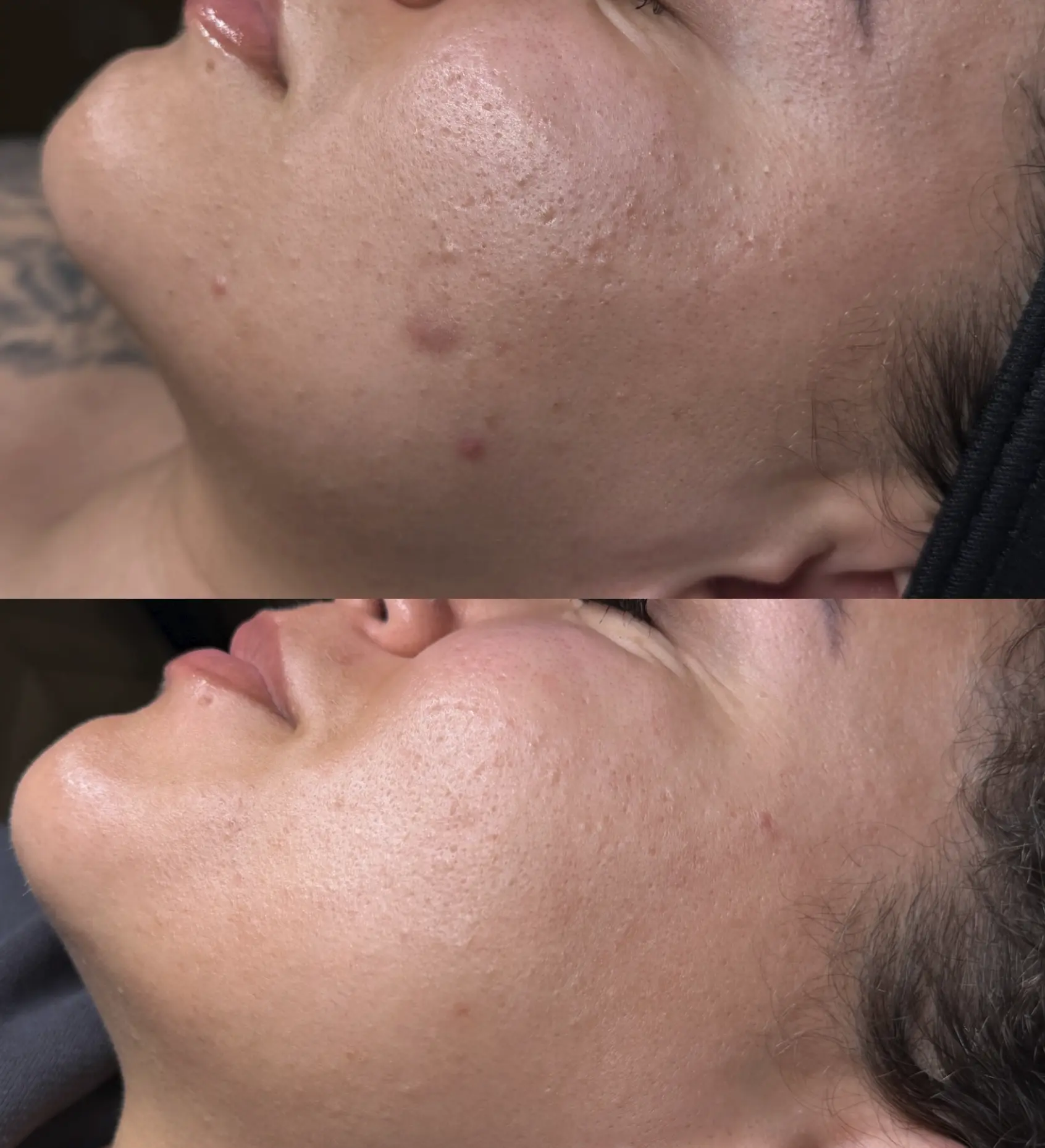
Recently, I had a client who’d gone overboard with the strong actives – her skin was tight, reactive and looking flushed after being compromised. We changed tack and started with gentle microdermabrasion and barrier repair. After just two sessions, her skin looked much calmer, smoother, and more balanced, and her makeup sat beautifully again – but the AI scan barely showed any change at all.
The thing is, most AI dermatology apps just aren’t built to detect things like inflammation reduction or barrier repair. Those are actually really important – especially if you’re looking at skin recovery.
The thing is, I always tell my clients this:
Your skin’s behaviour says a lot more than its score.
Why Brisbane Skin Behaves Differently On Scans
Living here in Australia, especially in Brisbane, means your skin has to put up with all sorts of environmental pressures – and that all impacts how you’re going to be assessed on a skin scan.
It’s hot and humid here, so your skin tends to produce more oil, which can make pores look bigger on scans even when your skin is actually healthy. We get a lot of sun here, too – and that can both accelerate pigmentation and have an impact on the readings between treatments.
Not to mention that long-term UV exposure can cause changes in your skin that are linked to skin cancer risk – and some scanners are trying to flag that up. But these tools aren’t diagnostic – they can’t replace a proper professional evaluation.
On top of all that, there are biological factors like epigenetic modifications to consider – how your environment is affecting the way your genes are expressed. And no scanner is going to fully get a handle on something as complex as that.
The Direction Of Skin Tech In 2026
The Direction Of Skin Tech In 2026 is all about more personalised treatment planning, better analysis tools, and beauty professionals expanding their technical skills, including where to learn the blurred soft-focus edge technique for lips.
Industry projections from Statista and McKinsey (2025-2026) are suggesting that the AI beauty tech sector is growing at a rate of over 20% a year – and clinics are not just adopting these tools for analysis, but for client education and engagement too.
At the same time, though, regulatory considerations are becoming a big deal – especially around things like making claims about diagnosing skin conditions or spotting skin lesions.
The bottom line is this: AI is getting smarter, but it still needs a human to interpret the results.
The Right Way To Track Your Skin Progress
If you really want to have an idea whether your treatments are working, I reckon this is what you need to do:
1. Combine AI With Professional Assessment
Use those fancy scans as a guide, then pair them up with real clinical expertise – it’s a match made in heaven.
2. Track How Your Skin Feels
Ask yourself a few questions:
- Is my skin smoother and nicer to the touch?
- Are breakouts happening a lot less often?
- Is my tone looking more even and a bit healthier?
3. Take Consistent Photos
Taking photos at the same time every day really helps to reduce all those variables and stop those fancy AI systems from reduce variables and keep going all haywire because of the lighting.
4. Follow A Structured Treatment Plan
Microdermabrasion works best in a series of treatments:
- Every 2-4 weeks, I like to get it done
- You’ve also got to pair it up with proper home care if you want to see real results
5. Support Your Skin Barrier
Use:
- Hydrating ingredients
- Barrier-repair products
- SPF 50+ daily
Without this, your results won’t last—no matter what the scan says.
Treatment Costs And What You’re Really Paying For
In Brisbane, a professional microdermabrasion treatment can cost anywhere from $90 to $180 AUD per session, depending on the clinic and what’s included.
Sometimes AI skin assessments are chucked in for free, or they’ll be an extra service you can get. But let’s be real here: the value lies in how that information is interpreted by a professional.
You’re paying for:
- Some real-life advice that actually means something
- A team that knows how to get it done safely & hygienically
- A tailored treatment plan that’s just for you, including practical considerations such as whether you can get a Hydrafacial with a beard.
- Some top-grade products that actually make a difference
Technology is a great tool, but it’ll never replace a real expert.
Should You Rely On AI To Measure Your Results?
Honestly, here’s what I tell every client:
AI skin scanners are great for giving you a bit of insight, but they’re not worth counting on to do all the heavy lifting on their own.
They’re best used as part of a bigger picture – all wrapped up with some professional guidance, some consistent treatments, and a bit of understanding about how your skin behaves over time.
Think of them as a useful reference point, not a magic number to aim for.
Final Thoughts: Real Skin Progress Isn’t Digital
Healthy skin doesn’t just magically appear because you’re chasing a perfect score – it comes from being consistent, taking care of yourself, and actually understanding what your skin needs.
If you’re investing in microdermabrasion, just trust the process, trust what you see and feel, and trust the person guiding you.
FAQ
Will an AI scanner give you a picture of your progress after just one session?
Not really. Most of the time, it takes a while for your skin to show significant changes, and scanners just aren’t all that accurate at detecting early improvements.
Why do scan results seem to change from one visit to the next?
It’s because of all sorts of factors like humidity, lighting, and how much water you’re drinking – all of which can have a pretty big impact on the readings.
Can you trust those skin analysis apps that you can use at home?
Well, they can give you a general idea, but they just can’t compete with the accuracy and precision of a proper system run by a professional.
How often should you check in on your progress?
Every four to six weeks is a good time frame, as it gives you a clear picture of what’s really going on without getting caught up in any short-term wobbles.
Can these tools actually detect serious skin issues?
They might pick up on some issues, but they’re no substitute for a proper diagnosis – if you’re ever in doubt, get some proper advice from a pro.